Showing posts with label adventure traveler. Show all posts

Thursday, April 2, 2020

Are There Too Many Elephants in the Room?

By Linda Ballou, NABBW’s Adventure Travel Associate
On my visit to South Africa in 2015, I was surprised to learn that there are too many elephants! With so many environmental groups fighting to prevent the poaching of these emblematic creatures for their ivory tusks, it was ironic to learn that as early as five years ago, the African parks were actually dealing with elephant over-population.  Then, an estimated 120,000 elephants roamed the vast, unfenced preserves of Botswana under the protection of armed, patrolling rangers. Today there are 130,000.
But that’s just the Botswana elephant population. Add in neighboring Namibia, Zimbabwe and South Africa and the African elephant headcount is estimated at  256,000, or more than half of the total estimated elephant population of Africa.
In response to the growing population Mokgweetsi Masisi, the President of Botswana, lifted the ban on hunting elephants set in place in 2014. Conservationists who have been working for years to find a better answer to the problem are infuriated.
Why Is the Growth of the African Elephant Population a Problem?
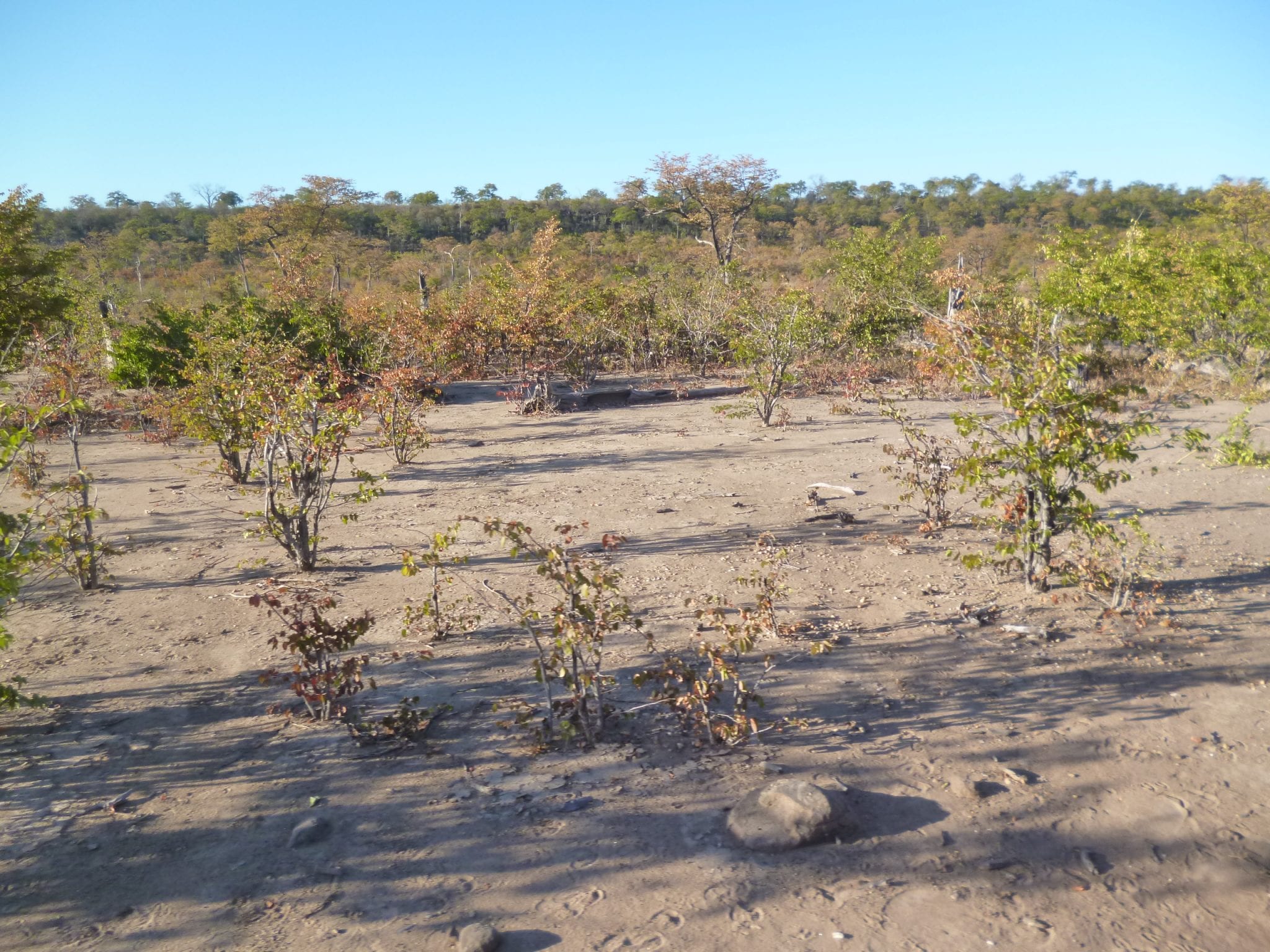
Example of an elephant-ravaged dead zone
Elephants graze about 18 hours a day, each taking in about 400 pounds of grasses that the kudu, impala, sable, and other wildlife need to survive. They eat the leaves of the Mopane tree that giraffes and other creatures rely upon.
Dead zones are left in their wake where they have eaten everything down to a nub and killed trees by debarking them with their tusks. This rate of unsustainable devastation will leave animals starving if something is not done to curb damage caused by the growing population of elephants clustered in Southern Africa.
Michael Masukule, leader of a community adjacent to Kruger National Park in South Africa, said, “They destroy our crops, occupy our drinking places, compete with our livestock for food, and are a danger to our people. Whatever decision you take, do not forget us people who encounter elephants every day.
Villagers live in fear of the pachyderms that plunder their crops at night leaving them without enough food for winter. Elephants have killed people living on the edge of and inside national parks when they’ve tried to stop them from eating everything in sight.
On the flight from Chobe, Botswana to Victoria Falls, Zimbabwe, we gazed upon a seemingly endless green carpet of Mopane forests pocked with the watering holes of thousands of resident elephants. It was hard to believe that there is not enough space to go around. But since 80 percent of Botswana is desert, the remaining 20 percent must be shared by vast herds of zebra, antelope, and elephants – and roughly 2.3 million humans.
Are There Any Viable Solutions to This Elephant Overpopulation?
Several solutions have been suggested, including:
  • Introducing birth control, which has proven to be both too expensive and impractical as the drug has to be re-injected every six months to be effective.
  • Culling the herds is talked about in whispers, but government officials are afraid that approach will alienate visitors and might even trigger economic sanctions from other countries who are not living with the elephants devastation, and do not understand the gravity of the situation.
Culling is particularly problematic because of the legendary intelligence and memory of the elephants. If they see humans killing off family members, they are likely to become aggressive and more dangerous to villagers and tourists alike. The entire family, including babies, would have to be killed at the same time to prevent this type of revenge. It’s not feasible.
  • Installing hives of African bees. There are, however, some smaller steps that can be taken to minimize the effects of elephants on local crops. Elephants are afraid of bees. The installation of hives of African bees at intervals surrounding a field have effectively deterred the elephants and given the villagers income from the honey they produce.
In 2002, researchers found that African elephants stay away from acacia trees with beehives. Later studies revealed that not only do the elephants run away from the sound of buzzing bees, they also emit low-frequency alarm calls to alert family members about the possible threat.
  • Planting a buffering crop of chilies. Just as they don’t like bees, elephants don’t like chilies. Capsaicin, the chemical in chilies that make them hot, is an irritant causing elephants to cough, sneeze, and eventually turn away from crops surrounded by a buffer of chilies. (For more details on this plan, refer to the 2014 BBC article by Shreya Dasgupta.)
  • KAZA – or migrating the elephants elsewhere. Other solutions considered are extending existing parks through more land acquisitions, moving more elephants from overpopulated to underpopulated parks, and opening corridors between parks to allow elephants to resume some of their old migration routes. Enter the Kavango–Zambezi Transfrontier Conservation Area also known as KAZA TFCA – which opens up elephant migration routes crossing international borders.
This initiative of the governments of Angola, Botswana, Namibia, Zambia, and Zimbabwe was formulated in 2012. It involves the land situated in the Okavango and Zambezi river basins where the borders of the five countries converge.
Sadly, implementing the good intentions of this agreement has proven to be difficult, as the elephants are not co-operating. They are remaining clustered in parks like Hwange in Zimbabwe where there are man-made watering holes able to sustain them throughout the dry season.
KAZA is a wonderful idea whose success will be determined in decades rather than years. This region is a very dry region with and has limited water resources. The elephant is a water-dependent species. Getting elephants to move (migrate) may very well be impossible as they follow the memories of the matriarch(s) who may have never learned a migratory pattern.
“Just because KAZA is implemented doesn’t mean the elephants can take advantage of it. They are at the mercy of the elements and their needs. Shutting down the man-made resources might stimulate elephant movement, but it will also cause tourism to suffer, one of the main reasons for the treaty being created,” according to Mat Dry, Safari Guide, author of This is Africa, and owner of TIA Safaris.
This article is not designed to diminish or minimize the efforts of conservationists fighting to prevent the slaughter of elephants in the Congo by militants who sell the ivory to purchase ammunitions, or in the Selous in Tanzania, a park that has been ravaged by poachers. That horrendous disregard for life must stop.
However, Africa is an enormous continent and what is true in the Congo and other parts of Africa is not the reality in other countries. Outsiders should understand that if culling becomes the only answer to this problem, it will not happen until all else fails.
But, again, this current situation is not sustainable for the other animals in the parks or for the humans living in and/or on the edge of the last great wild places in Africa.
Sadly, instead of ordering culling in a responsible, humane way by rangers, the elephants are to be shot by trophy hunters. Elephants are intelligent creatures with keen memories who protect members of their family.
This approach of killing a single adult member of a family will create angry, vengeful matriarchs, and rogue bulls that will likely terrorize villagers. When I was in Zimbabwe, I could hear the low rumble of the elephants grazing peacefully nearby our tent camp while we were sleeping.  A marauding elephant could easily destroy a wilderness camp. This is a dangerous response to a serious problem that could wreak havoc for the 2-billion tourist industry.
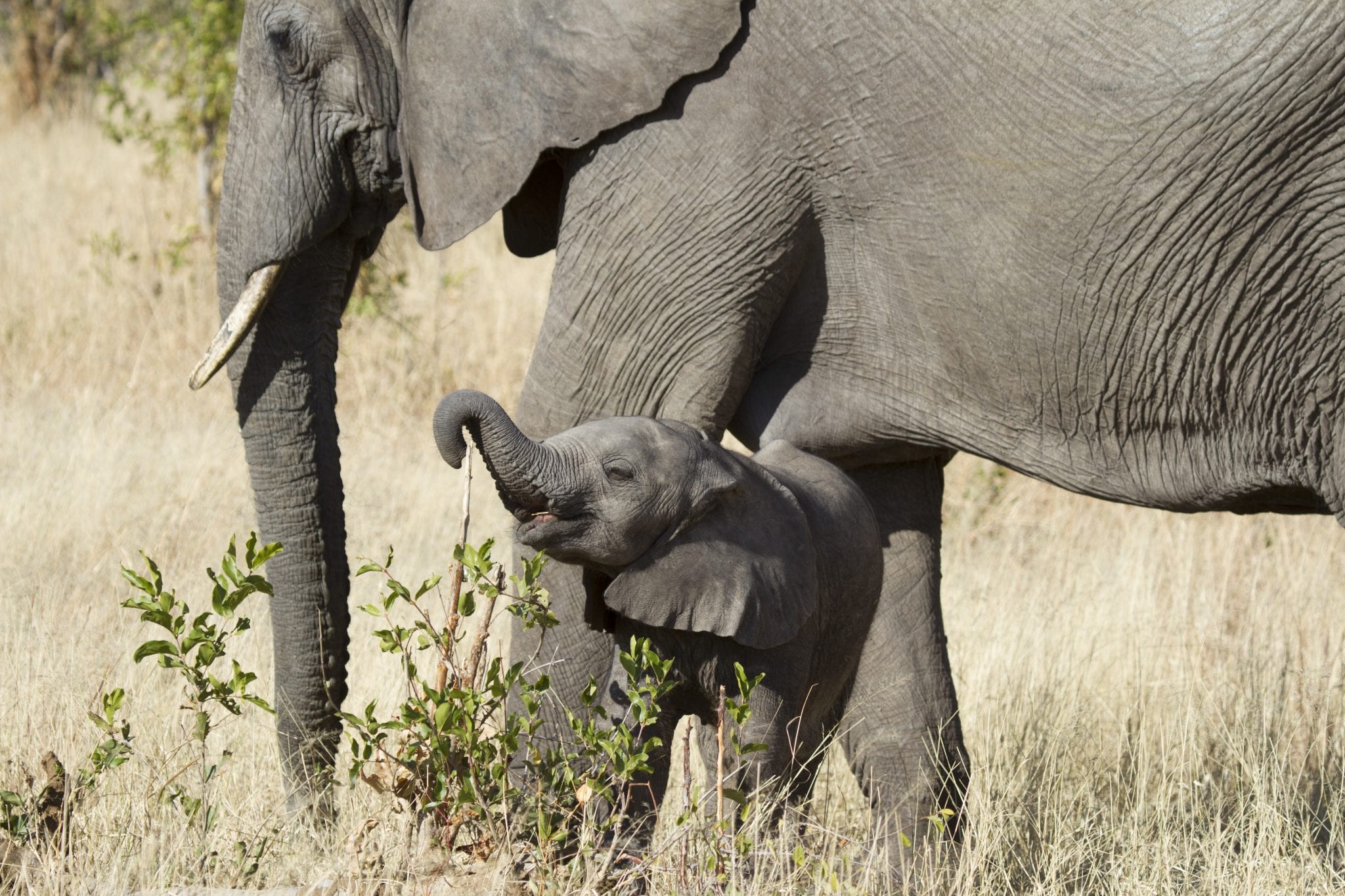
The restriction of flights to Africa to prevent the spread of COVID-19 is giving elephants a reprieve. Hunters can’t enter the country, but, according to a recent Bloomberg.com article by Antony Squazzin, “Seven hunting packages, of 10 elephants each, were available for auction. Only one (package) was not sold as no bidders met the reserve price of 2 million pula ($181,000),” said Adrian Rass, managing director of Auction It Ltd, of Botswana.
Hopefully, an answer to the elephant conundrum will appear by the time things get back to our “new normal.”
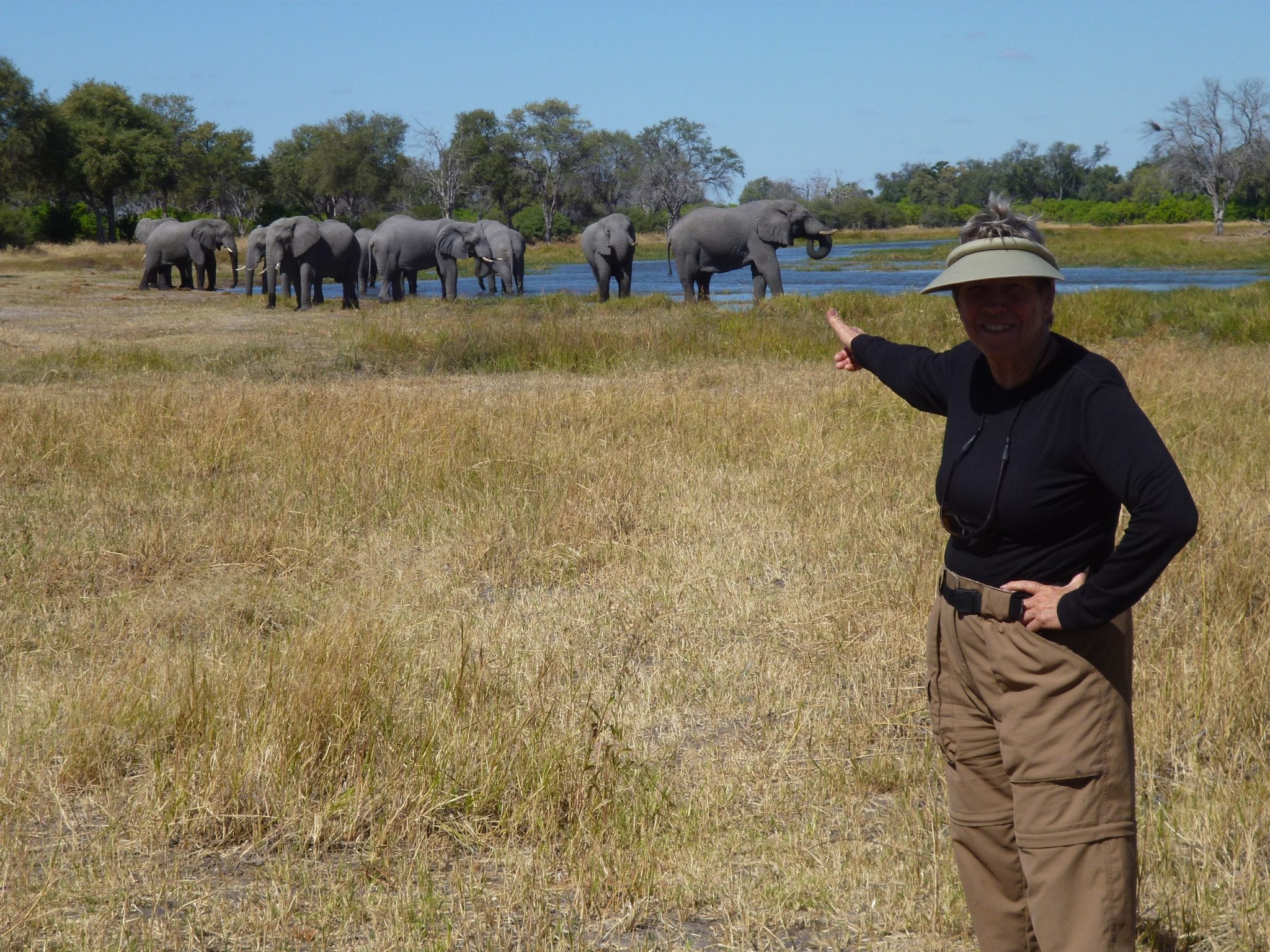
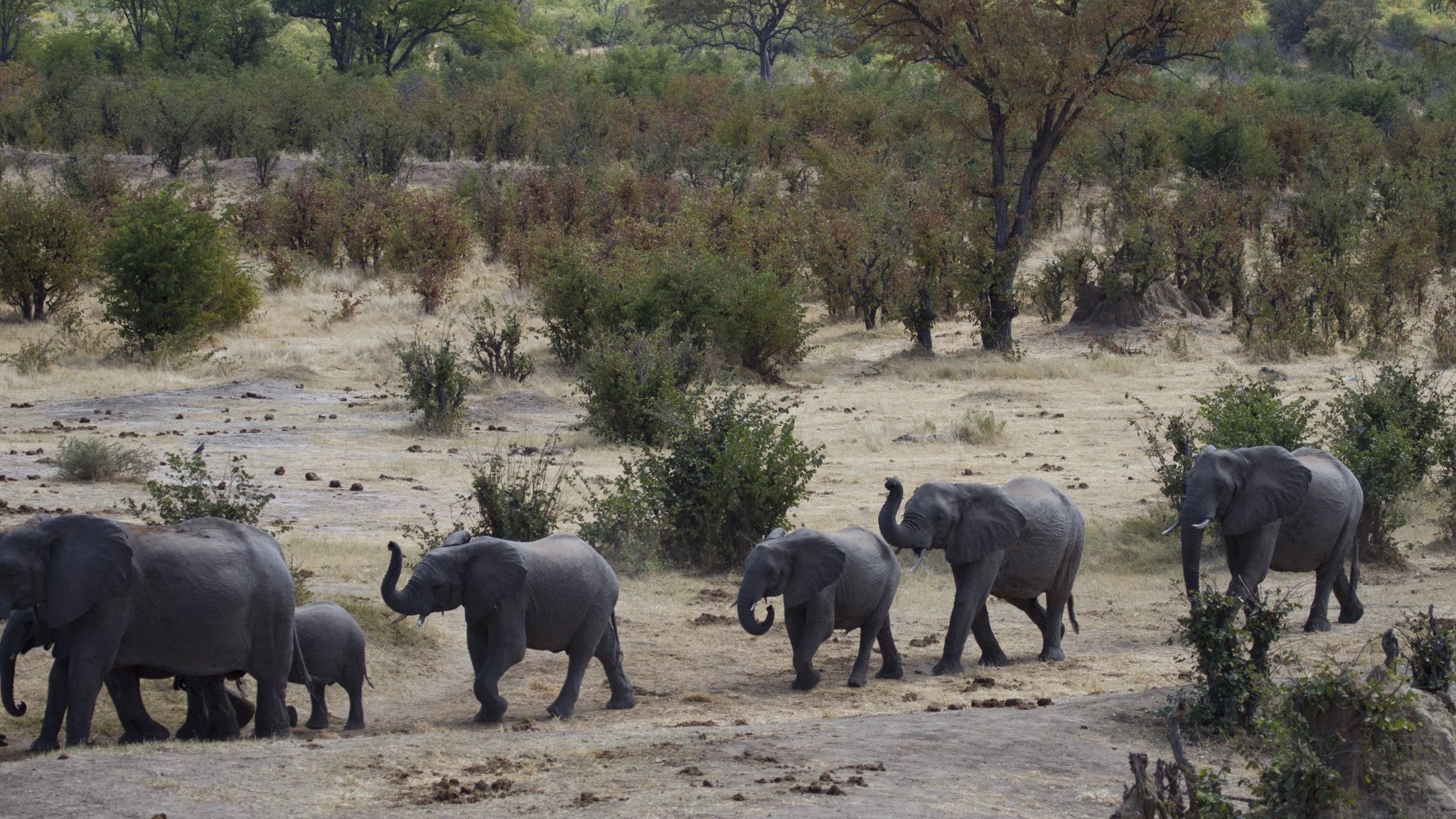
Note: Special thanks to photographer Tom Schwab for the wonderful elephant photos. 
This article first published on the National Association of Baby Boomer Women,
Editor: Anne Holmes, Boomer CEO
Linda Ballou is an adventure travel writer with a host of travel articles on her site www.LostAngelAdventures.com. You will also find information about her travel memoir, Lost Angel Walkabout-One Traveler’s Tales from Alaska to New Zealand, and Lost Angel in Paradise where she shares her  favorite  hikes and day trips on the coast of California.
Subscribe to her blog www.LindaBallouTalkingtoYou.com to receive updates on her books, travel destinations and events.

Tuesday, December 31, 2019

Purgatory or Paradise


My mission is to get to as many beautiful places that I can before they are gone! It looks like the climate crisis is putting an even greater urgency on my quest than ever before. I have been working on getting to Australia for a while. Now, that I am booked with Overseas Adventure Travel on their Ultimate Australia tour the place is on fire. I don't know if I'm heading for purgatory or paradise! One thing for certain I'm going! I will give you a full report of what areas are being most heavily impacted and those that are not.
I am touring Tasmania on my own with Air B&B bookings around the Island state. My last stop will be the Blue Mountains which is a two hour train ride out of Sydney. Fires definitely have sullied the air there, but hopefully it will have cleared by the time I arrive in Feb. If so, it will be a great capper to an incredible journey.

Wish me luck! I am wishing you all the best of luck for fabulous New Year!

Linda Ballou, shares a host of articles and information about her travel books on her site www.LostAngelAdventures.com.  You will find information about her novels and media offerings at www.LindaBallouauthor.com.

Subscribe to Linda’s blog www.LindaBallouTalkingtoyou.com to receive updates on books, and travel destinations and events.


Sunday, January 1, 2017

Triumphant Year for the" Lost Angel"

It pays to google yourself once in a while. To my delight, I discovered that I am on the list of Top Baby Boomer Blogs forSenior Adventures. As the Adventure Travel Expert on the National Associationof Baby Boomer Women, my articles are shared in many places that I have not initiated. It is fun and exciting to see how the internet works in strange and mysterious ways

 Africa has been on my list for about a decade. I finally made it in grand style this year.  The Ultimate Safari with Overseas Adventure Travel that took me to less traveled tracks in Botswana, Zimbabwe and Zambia was everything I had hoped for. I wrote half dozen articles about my time there. Here is the link to my interview on Around the World TV.Here is a link to Into the Wilds of Africa  featured in Real Travel Adventures E-zine.
Me with my favorite guide Cowboy


Collateral goodness from my journey brought me to Mat Dry, safari guide and owner of  This is Africa safaris. He gave me the most flattering review that Lost Angel Walkabout has received to date!

There is no other way to say it; Linda Ballou is an OUTSTANDING writer and an incredibly dynamic individual! Lost Angel Walkabout is about as captivating a collection of travel tales as one could hope to read..

 Mat helped me with my article The Elephant in the Room that I shared on Green Loons eco tours. I felt the need to bring awareness to an environmental problem that is not discussed because South Africans are afraid it will dissuade tourists from visiting their respective countries.
Two sides to the Elephant story


Peter Steyn, editor of Globe Rovers Magazine headquartered in Hong Kong, reached out to me on Social Media. That is one of the really fun things about my writing journey. You never know who will stumble upon one of your articles, or books and find you interesting.

This is the conversation that ensued and appeared in Globe Rovers along with the following book review of Lost Angel Walkabout. What a fun encounter. Check out his magazine for lots of great info on distant destinations for the intrepid traveler.


Stay tuned in for more adventures to come as I work on my next travel collection "The Lost Angel Rides Again", Wild Ballou Wander, ? You tell me. Cheers Linda

Armchair travel makes a great gift for your travel loving friends!!
Lost Angel Walkabout available with free shipping on my site
www.lindaballouauthor.com or all online distribution sites.


Saturday, June 15, 2013

Doing it My Way on the Hana Highway

The highway to Hana, Maui should be listed as another wonder of the world. Each day thousands traverse the narrow road that hugs the coast of southeast Maui. It is a miracle that the over fifty one-lane bridges, many of which are over a hundred years old, don’t collapse beneath the steady stream of cars. Drivers are rubber necking to see the most beautiful waterfall, and angling to find a pullout near unmarked trail heads to take a closer look. Pesky locals press tourists trying to take in the beauty on the unfamiliar curvaceous highway to go faster. That distracted drivers careening around blind curves don’t plunge over the steep precipice into deep gulches to an instant death is a mystery to me.


Chaos can be avoided if you do the highway my way. Make arrangements to spend at least two nights in Hana, rather than rushing in and out in one day to the Seven Sacred Pools aka O’hi’o Gulch. This gives you time to explore and make stops along the way. Fuel up at trendy Pa’ia, the gateway to Hana, where there are several good eateries. While you are there, stop at the Mana Food Store to pick up a few supplies for picnic lunches. Leave at about noon giving the rest of the travelers a head start.

 Stop at the Garden of Eden about halfway into the drive. There you will find miles of manicured lanes winding through an incredible array of tropical plants shaded by the canopy of towering mango, banyan, and enormous fanning palms. Viewing platforms framed in luxuriant foliage overlook a vast blue expanse of the Pacific and stunning Puohokamoa Falls. I strolled through the garden in reflective solitude on a sunny day in January, peak season in the Islands. When you leave the Garden of Eden keep an eye out for the trail head just past the eleven mile marker to the pool beneath Upper Puohokamoa Falls where you can take a dip.


I wanted to make this journey back to what is left of Old Hawaii to revisit a time when I was in formative stages. Seeing the lush tapestry of deep ravines cloaked in deep green and spiked with orange African tulips soothed my weary little soul way back then and still does today. I dropped out of society to live on the north shore of Kauai in 1978. I found peace there listening to the patter of rain on the leaves, lull of the surf breaking on the reef a half mile out, and waking to the chorus of birds. I remembered taking long walks on lonely beaches and just being there. I hoped Hana would allow me this once again.

There only a few places to stay in Hana: the exclusive Travassa Resort, a smattering of bed and breakfasts, or setting up camp at Wai’anapanapa-Black Sand Beach. The beach park is riddled with sacred sites, burial grounds, and caves that are easily accessed on a coastal trail that wraps the bay. Ferocious bearded monsters pummeling the black lava into sand make a dramatic show, but don’t make for safe swimming.  I found an eco-lodge tucked in the Hana Botanical Garden close to the beach park. The entrance to Kahanu gardens, the site of the largest and one of the best preserved heiau (temple) in the Hawaiian Islands was about a half mile from my rustic digs. You must make reservations to tour this 15th century heiau that spans three acres.
Hamoa Beach-Hana


I rose early and drove through sparkling, dew-laden meadows stopping to take in splendid Wai-lua Falls along the way to Haleakala National Park. I was eager to hike the Pipiwai Trail, a root and rock strewn path that traces a death-defying gorge up to the Waimoku Falls, a 400-foot plunge down a sheer rock face. A portion of the track took me though a towering wind-whipped bamboo forest that felt like being inside a giant wind chime. By the time I got back to park headquarters the tourist vans had arrived. I shared the famous Seven Sacred Pools with other travelers from around the globe. Bracing, sweet water spilling over rock ledges to form three large pools did not disappoint. I swam in the second pool that is said to “free limitations.”

The rest of day was spent lollygagging at a scalloped-shaped cove where gentle, turquoise waves curl onto a powdery sand shore. Hamoa Beach, by far the best swimming beach at this end of the world, is not to be missed
Ka'ahumanu (Wai-nani ) as I see her


Kauai is where I fell in love with the relaxed ways of the Islands, the warmth of the people, and beauty without end. That is where I met Captain James Cook, Kamehameha the Great, and his favorite wife Ka’ahumanu who became the inspiration for my novel Wainani; A Voice from Old Hawai’i. She was a royal whose mother hid in a cave here in water-rich Hana so that her child would not be killed by her jealous ex-lover, the ferocious ruler of Maui.  Hanalei on the north shore of Kauai, most recently the backdrop for the film The Descendants, was a sleepy, backwater when I was there. That is what Hana still is today—remote, rugged, rainy, undisturbed, gorgeous, and inhabited by a few lucky souls who want to keep it that way.


On the way back to civilization I enjoyed a diversion to the Ke’anae Peninsula. This road hugs a dramatic coastline and deposits you at a handy beach park. While sitting beneath a broad-leafed tree on a rock perch watching enormous swells cresting into foaming white against jutting lava, it became clear to me; the searing sunsets, the embrace of warm translucent waters, the endless azure skies, and the wind voices had spoken. My imagination was ignited once again by primal elements; earth, wind, fire and the ceaseless energy of sea as sure as these Islands continue to be forged by them today— and forever will be.

Take Maui Revealed by Andrew Doughty with you. It is an excellent guide to the Hana Highway experience.
Hana Maui home page
http://www.hanamaui.com/

http://www.hanamaui.com/lodging/

Tuesday, February 1, 2011

Adventurer Susan Alcorn gives Lost Angel Thumbs Up!


Susan Alcorn does for the Bay area what I do for L. A. and surrounds on Examiner.com
We both love to hike and share our favorite outings with other outdoor enthusiasts.
She has written a great book-We’re in the Mountains and Not over the Hill- that you can purchase at her site http://www.backpack45.com/. I was quite pleased to have a kindred spirit read my own book Lost Angel Walkabout. Even more pleased with her response to my work

Review by Susan Alcorn

Beautifully descriptive passages, inspiring adventures, and reminders of the bounty of nature combine to make Lost Angel Walkabout an intriguing read. Author Linda Ballou's stories of adventure will leave you breathless. In this fascinating collection of trips she's taken far and wide, she not only goes horseback riding on perilous cliff side trails in Ireland, but also learns how to jump fences. On the Green River near Moab, Utah and the Salmon River of Idaho, she starts out on kayak trips that she thinks will be mostly a serene glide. Sometimes it is peaceful and idyllic, other times... "I found myself flying out of my boat and falling into the center of a six-foot hole." As in most of her tales, Ballou emerges from her experience -- in this case being hurtled downstream in the Salmon River -- feeling stronger and even more courageous. Note of disclosure: I received Lost Angel Walkabout as a review copy with the option of reviewing it if I was so inclined. I was happy to be able to give it a 5-star review. I am also a travel writer and share Ballou's love of adventure and the outdoors. She does not travel as a tourist, she travels as an adventurer seeking to immerse herself in the culture and surroundings of her destination.


Susan’s Examiner Column
http://www.examiner.com/hiking-in-san-francisco/susan-alcorn